The shortage of spare parts availability
in France was proving increasingly disastrous to the repair of Mechanical
Transport. Manufacturers were fully stretched fulfilling War Office orders
for new vehicles and transport was prioritised for munitions and food. On
9 November 1916, Brigadier-General WGB Boyce, Director of Transport, put
forward a proposal to the Base Commandant at Rouen to open a further Heavy
Repair Shop in Rouen to improve the output of Heavy Repair Shops and the
spare parts position using German Prisoner of War labour.
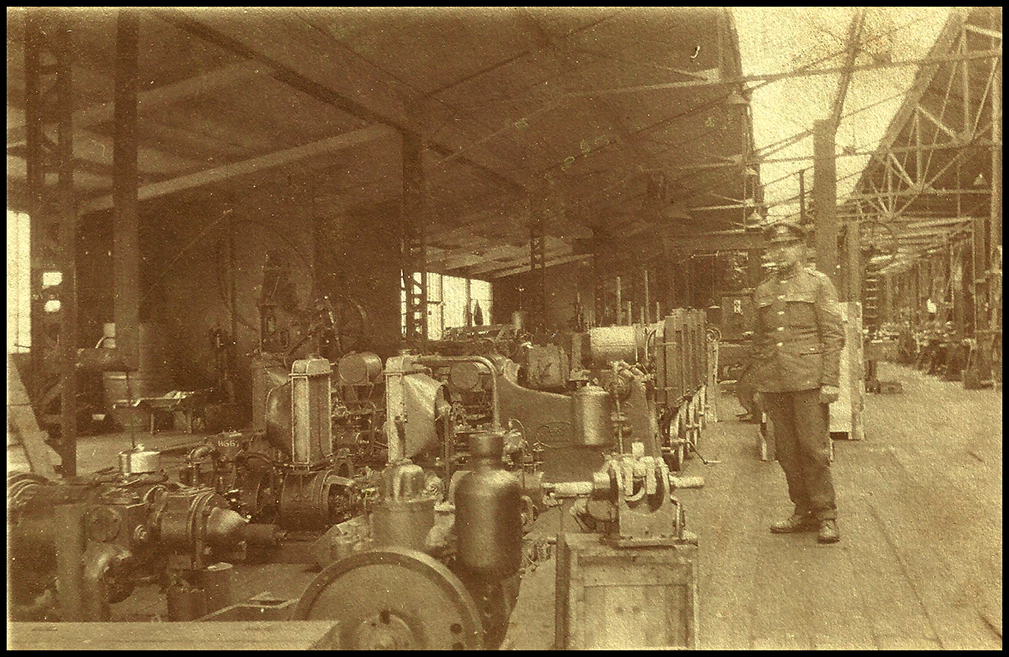 The idea was passed to the War Office in
London and approved by the Army Council on 12 January 1917 on the
condition that Prisoners of War were to be classed as ‘working parties’
only. On the same day, 899 Coy ASC (4 HRS) was formed as a subsidiary of 2
HRS with workshops at Chantiers de Normandy in Rouen, an indication of the
urgency of the situation. On 28 February, the Establishment of staff was
435 with 400 from 40 Prisoner of War Company. On 20 April, 60 POW Company
was formed with a further 324 prisoners.
The idea was passed to the War Office in
London and approved by the Army Council on 12 January 1917 on the
condition that Prisoners of War were to be classed as ‘working parties’
only. On the same day, 899 Coy ASC (4 HRS) was formed as a subsidiary of 2
HRS with workshops at Chantiers de Normandy in Rouen, an indication of the
urgency of the situation. On 28 February, the Establishment of staff was
435 with 400 from 40 Prisoner of War Company. On 20 April, 60 POW Company
was formed with a further 324 prisoners.
The first parts received for repair were
59 frost damaged radiators on 10 February and the priority of the
workshops was repair of parts rather than overhaul of vehicles. In March,
4 HRS began manufacturing spare parts as well as refurbishing and in the
first week parts to the value of £50 (£3,180 in 2019) were made.
On 14 May, 4 HRS moved to new workshops at
Rue de Grippes, Rouen and 25 Daimler lorries were received for overhaul.
These were the only vehicles overhauled by 4 HRS and the workshops were
employed exclusively on the manufacture and salvage of spare parts from
then on.
During the first week of June 1917 parts
to the value of £2,165 (£137,830) had been salvaged and refurbished. 88
POW Coy joined 4 HRS on 30 June and by mid-August parts valued at £3,527
(£224,537) were salvaged and new parts to value of £281 (£17,900) were
manufactured every 7 days. This not only helped ease the spares shortage,
it also contributed a considerable and increasing saving to the Treasury.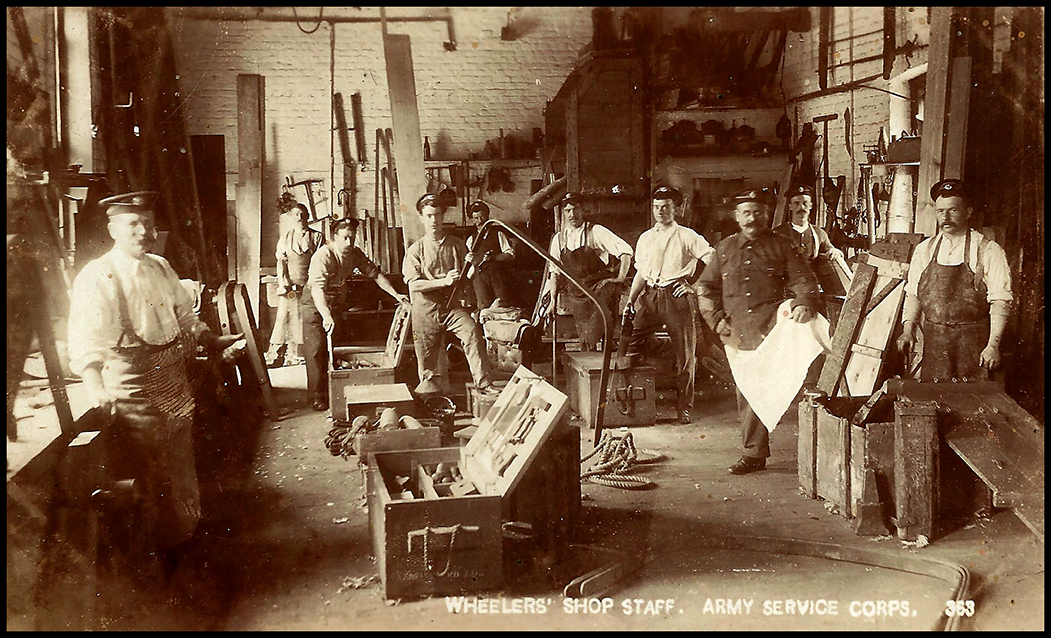
The workload continued to increase and 124 POW Coy joined in November and on 18 December, 146 POW Company joined 4 HRS, making 5 POW Coys employed. By this time the value of work done on a weekly basis was £5,000 (£349,480).
4 HRS appears to have ceased in April 1918, when the some of the workshops were occupied by 3 HRS after they were evacuated from St Omer ahead of the German Spring Offensive. From the time that 4 HRS opened for work in April 1917 to its closure in April 1918, work to the value of £250,154 (£14,321,630) had been completed. Despite the valuable and essential work done by 4 HRS, it only amounted to 10% of the spare parts needed on the Western Front for the same period.
The Army Service Corps received the Royal
Warrant in recognition of their wartime service (along with the Army
Ordnance Corps) on 17 November 1918 becoming known as the RASC, indicating
that the piece in the cabinet was built, or at least inscribed, post-war.