Formed
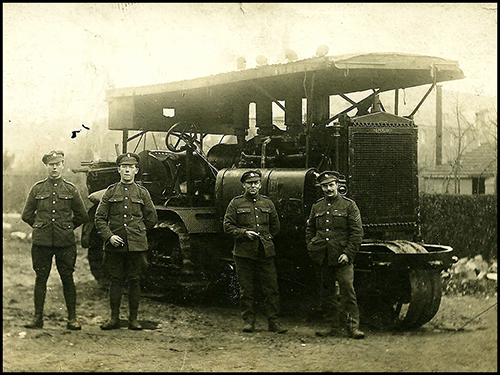
at Grove Park on 16th November 1915, 604 MT Coy ASC was attached to 65
Siege Battery. The company arrived at Boulogne on 20th January 1916.
Reorganisation of the
Army Service Corps caused the company to be attached, on 1st May 1916, to
Corps Headquarters as XV Corps Heavy Artillery, more usually known as XV
Corps Siege Park, or “P” Siege Park. In this role it was responsible for
the administration of all the mechanical transport operated by the Siege
and Heavy Batteries attached to the Corps. Based near the Edgehill
railhead for the duration of the Battle of the Somme, the strength of the
unit remained constant at 26 batteries with 1,500 personnel and 600
lorries. Keeping up with road maintenance required 100 lorries per day and
the drivers often worked seventy-two hours without break.
By 24th August the
Park strength had grown to thirty-nine Siege Batteries and eight Heavy
Batteries, with three Royal Marine Artillery Batteries added. Not a huge
increase but the growth in extraneous duties demanded the mechanical
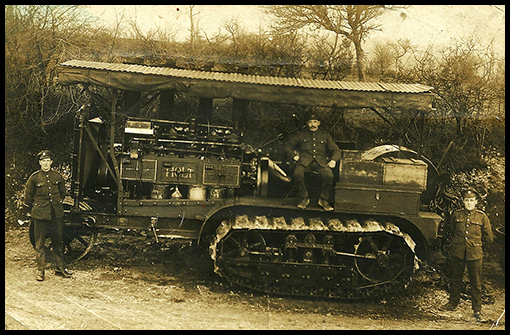
transport increased to fifty-nine motor-cars, 1,604 lorries, 165
gun-tractors and 278 motorcycles with eighty officers and 1,604 other
ranks.
Prior to Standfest,
from 22nd June to 3rd July, the Park delivered 122 loads of ammunition. By
July 31st, a further 4,556 loads had been delivered, with, on the 19th,
307 loads amounting to 920 tons. Extraneous work in addition to the Park’s
designated role, amounted to 1,455 loads of Royal Engineers material and
2,913 loads of general stores.
During August, 3,340
loads for the Royal Engineers and 6,725 loads (20,175 tons) of roadstone
give an inkling as to the efforts needed to maintain the roads that were
essential to supply the frontlines. Supplying the battle front involved
far more than replenishing the guns and the tonnage of supplies required
increased exponentially as the numbers of troops increased.
During the first week
of September the Park was reduced by seventeen Siege Batteries, though any
reduction in workload was negated by the establishment of a Supply Depot,
supplying both Artillery and ASC personnel with 20,000 rations daily.
Despite the lorry strength being reduced from 1,050 at the end of August
to 488, 2,597 loads of Royal Engineers material and 2,355 loads of
roadstone were carried during the month.
The lorries were
serving their own batteries, plus all the roads in the back area and in
front of their batteries. The constant traffic on the roads was destroying
the road surface and once the surface was compromised the condition
quickly worsened considerably. It was not only lorry traffic responsible
for the damage. Hundreds of horseshoes and thousands of army boots
trampling the surface destroyed roads throughout the area.
Roads in forward areas
were within range of the enemy’s artillery and machine gun fire. Every day
the drivers drove into the danger, sometimes for two or three journeys to
keep road companies supplied. Men of the road companies were themselves
working constantly within range of the enemy. The roads were easy targets,
constantly shelled with high explosive, shrapnel and gas. Often roads were
deemed too dangerous to be used or worked on during daylight hours.
 Working parties for
road repairs and digging new gun positions etc., were taken to the forward
areas by lorries. Some sections of road and crossroads, such as the
notorious ‘Hellfire Corner’ at the outskirts of Ypres, were particularly
vulnerable to enemy shells. Here, men would alight from the lorries and
continue on foot across the fields leaving the driver to run the gauntlet
of shellfire alone. They would then be picked up at a safer place to
continue their journey to work. Major Lee remarks that drivers reported
infantrymen returning from the trenches asked which way they were going.
When told, they replied, ‘if you are going on that road I will walk’. They
evidently considered the roads that drivers used every day too dangerous
and preferred the country footpaths, despite being exhausted and carrying
heavy packs.
Working parties for
road repairs and digging new gun positions etc., were taken to the forward
areas by lorries. Some sections of road and crossroads, such as the
notorious ‘Hellfire Corner’ at the outskirts of Ypres, were particularly
vulnerable to enemy shells. Here, men would alight from the lorries and
continue on foot across the fields leaving the driver to run the gauntlet
of shellfire alone. They would then be picked up at a safer place to
continue their journey to work. Major Lee remarks that drivers reported
infantrymen returning from the trenches asked which way they were going.
When told, they replied, ‘if you are going on that road I will walk’. They
evidently considered the roads that drivers used every day too dangerous
and preferred the country footpaths, despite being exhausted and carrying
heavy packs.
As the Park’s lorries
decreased, when Corps’ roles changed, so did the workshop facilities and
the stocks of spare parts permitted on establishment. Workshops were not
garages but lorries with lathes, drills and other workshop tools installed
on the body with repairs carried out alongside. Often workshops would be
parked alongside each other allowing a tarpaulin to be stretched between
them to create a covered working area.
From the beginning of
July to the end of September, sixty-eight motor-cars, 1,284 lorries, 375
motorcycles and 131 gun-tractors were repaired and nineteen motor-cars,
154 lorries, 141 motorcycles and 205 gun-tractors overhauled. 376 wheels
were sent to tyre presses for re-tyring. All repairs had to be conducted
in the open air and the normal working day was 6.00am to 10.00pm with
thirty minutes for breakfast and tea and one hour for dinner. On average
thirty-two lorries were turned out daily.
The work of the Siege
Parks, and all ASC companies, whether horse or mechanical, although
unglamourous and thankless, was vital to the supply of guns and men. Units
like 604 MT Coy ASC deserve recognition and their men, our respect.